
In an illustrative 9-by-11-foot bedroom, can the existing bed fit after a documented 12-inch radiator zone is reserved? That number is not a universal clearance, but the question sets the right order: identify, measure, test, place, and inspect so heat, controls, textiles, windows, and service access remain clear.
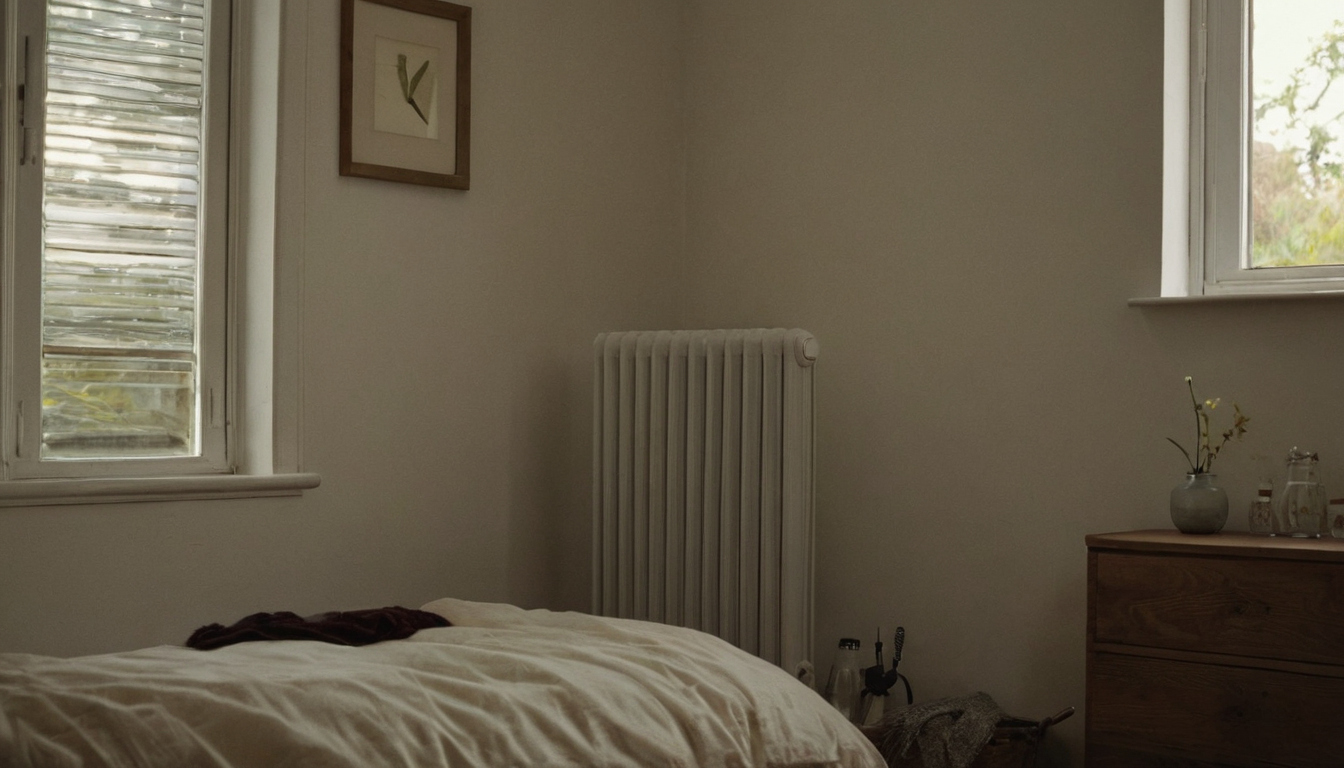
Arrange a Small Bedroom Around a Steam Radiator Without Blocking Heat or Access shown as an editorial planning reference.
How should a renter identify the bedroom radiator before moving furniture?
Identify the emitter and obtain the building’s operating rules before shifting the bed. Clearance, valve position, cover use, and service access vary by system and property, so a universal distance is not reliable.
| Emitter | Useful clues | Next check |
|---|---|---|
| One-pipe steam | One pipe and usually a radiator air vent | Confirm valve and vent instructions |
| Two-pipe steam | Separate supply and return pipes | Confirm both service points |
| Hot water | May have two pipes and a bleeder | Request system-specific guidance |
| Electric or unknown | Cord, wiring, enclosure, or unclear piping | Ask maintenance before arranging furniture |
A steam radiator and a hot-water radiator may require different operating rules
Cast iron alone does not identify the system. The U.S. Department of Energy explains that one-pipe steam uses one pipe for steam supply and condensate return, while two-pipe steam separates the supply and return. A conventional one-pipe radiator also commonly has an air vent. Photograph the unit, pipes, valve, vent or bleeder, enclosure, and visible label, then ask maintenance to confirm the system.
The lease and building instructions control renter-made radiator changes
Check the lease and written property rules before adding a shelf, guard, cover, or adjusting unfamiliar controls. In New York City, HPD defines heat season as October 1 through May 31 and directs tenants to report inadequate heat to building management before contacting 311. Other jurisdictions use different dates and reporting procedures.
Once the system and rules are clear, measure its complete operating and service zone.
What bedroom and radiator measurements are needed before testing a layout?
Measure the bedroom as two overlapping plans: the furniture footprint and the radiator’s documented operating and service zone. Record the actual equipment and controls rather than relying on mattress size or a guessed clearance.
- Map the room. Measure floor-level width and length, baseboard projections, wall irregularities, doors, closet doors, window trim, sill, and outlets.
- Measure the bed. Record the frame’s outside width and length, headboard and footboard heights, under-bed clearance, and bedding overhang.
- Open the storage. Measure the space required by drawers, a trundle, or a lift-up platform.
- Trace the radiator. Record body width, depth, and height, then mark the furthest projection of every valve, vent, pipe, union, and existing cover.
- Check moving fabric. Measure curtain length and fullness, including how far the fabric swings when the window opens or air circulates.
- Confirm the protected zone. Copy equipment-specific clearance instructions and ask maintenance how much room is needed to operate the valve, reach the vent, and approach the unit for service.
The bed frame footprint matters more than the advertised mattress size
Use the bed manufacturer’s dimensions when available, then verify them with a tape measure. A platform rail, angled headboard, footboard, open drawer, or loose duvet can cross into the radiator zone even when the mattress appears to fit.
Valve, vent, and pipe projections belong on the floor plan
Draw a plan view showing the radiator body, each fitting, the documented boundary, and an unobstructed maintenance route. Confirm which components require routine access with the property manager or heating technician.
Legal heat measurements do not establish furniture clearance. For covered Maine rentals where the landlord must provide heat, 14 M.R.S. §6021 generally sets a 68°F standard measured five feet above the floor and three feet from exterior walls, subject to statutory conditions and exceptions. With the floor plan complete, test the bed positions.
Which bed position works best beside a steam radiator in a small bedroom?
The best position keeps the frame, mattress, pillows, and hanging bedding outside the documented radiator zone while leaving a direct route to the valve and vent. Test a perpendicular wall first. Consider a parallel position only when measurements and equipment-specific guidance support it.
A bed on the wall perpendicular to the radiator usually separates sleep and heat zones most cleanly
Consider this illustrative, not universal, plan: a 9-foot by 11-foot room, an 80-inch by 58-inch bed frame, and a radiator beneath the window. Suppose written building guidance requires a 12-inch operating zone around the body, valve, and vent. With the made bed 18 inches from that boundary, the valve stays visible and reachable without moving the frame.
| Bed position | Fit result | Valve and vent access | Textile exposure | Door and window effect | Verdict |
|---|---|---|---|---|---|
| Perpendicular | 18 inches from the example boundary | Directly reachable | Low | Both openings remain usable | Test first |
| Parallel, offset | Must clear the documented zone | No mattress movement allowed | Higher | Check the remaining bedside strip | Conditional |
| Opposite wall | Radiator zone stays open | Clear if the approach remains open | Lowest | May crowd the entry | Good if circulation survives |
A bed parallel to the radiator wall works only with a verified offset
Measure from the documented boundary to the bed’s closest point, including frame corners, mattress bulge, and blanket overhang. If no manufacturer instruction or building-approved service zone is available, ask maintenance for written guidance instead of borrowing a generic figure. Reject any position that requires moving the mattress for routine valve or vent work.
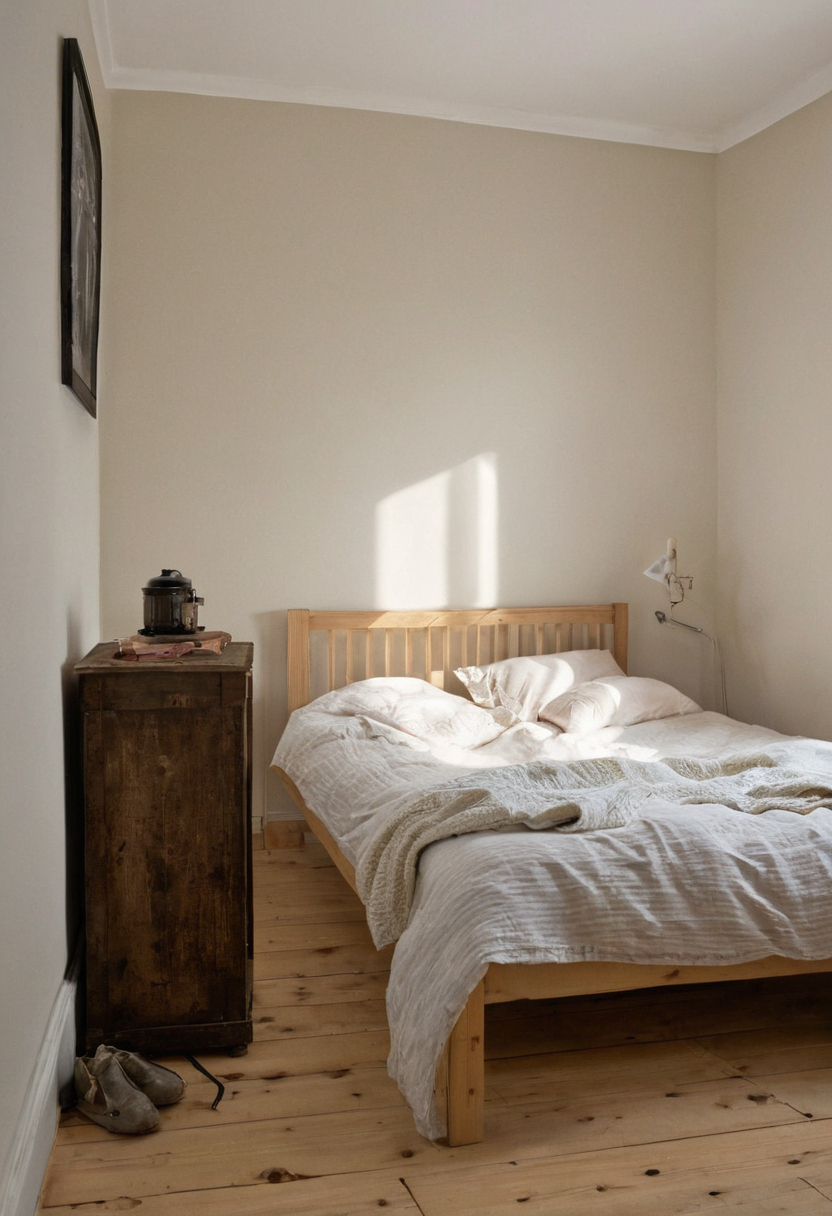
Which bed position works best beside a steam radiator in a small bedroom shown as an editorial planning reference.
A bed should not bridge, cover, or trap the radiator
Do not let pillows, blankets, the headboard, or the frame fall or shift into the required zone. Do not span a conventional steam radiator or assume a decorative cover makes that safe. A required egress window, door swing, or maintenance route cannot be traded away for fit.
Furniture placement also cannot cure inadequate building heat. For covered New York City dwellings during heat season, HPD requires at least 68°F from 6 a.m. to 10 p.m. when the outdoor temperature is below 55°F, and at least 62°F from 10 p.m. to 6 a.m. regardless of outdoor temperature. Report a heat problem rather than crowding the radiator in an attempt to redirect warmth.
Essential bedroom furniture should preserve the radiator’s access route
Place nightstands, dressers, desks, hampers, and bins only after fixing the bed and radiator zone. Furniture passes only when the valve, vent, window, and maintenance route remain reachable without lifting, emptying, or dismantling anything.
| Furniture | Access and heat check | Decision |
|---|---|---|
| Nightstand | Measure drawer swing, outlet, and cable route | Keep on the cool side |
| Dresser | Include opened drawers and service passage | Move if access narrows |
| Desk | Check chair pullback, cords, and heat exposure | Relocate from the radiator wall |
| Chair | Test its parked position | Remove if it drifts into the route |
| Hamper | Keep fabric outside the equipment zone | Move to a cool corner |
| Under-bed bin | Confirm independent removal | Keep if readily reachable |
A narrow nightstand can sit on the cool side of the bed
Keep one bedside surface if its footprint and drawer swing remain outside every documented equipment zone. Route charging cables away from hot equipment and pipes rather than behind the radiator.
Furniture that must be moved for radiator service does not provide dependable access
Retain the bed first, preserve heat and service access second, then relocate nonessential pieces. Casters do not make an obstruction acceptable if furniture can roll toward hot equipment. After that edit, decide how much furniture the bedroom can comfortably hold.
Curtains, bedding, radiator covers, and shelves require separate heat checks
Textiles can shift toward a radiator during ordinary use. Keep curtains, duvets, pillows, clothing, and upholstery outside the equipment-specific restricted area with the window open and bedding disturbed.
Short curtains reduce risk only when they remain outside the documented radiator zone
- Measure moving fabric. Record curtain length, sill height, and horizontal distance from the radiator, valve, vent, and pipes.
- Test ordinary movement. Open the window and operate any nearby fan to see whether fabric swings or drops toward hot surfaces.
- Disturb the bedding. Arrange the duvet and pillows as they sit after sleep, not as they look on a freshly made bed.
- Read care labels. Follow heat warnings supplied with bedding, curtains, and upholstered furnishings.
A radiator cover or shelf is not automatically renter-safe
- Obtain written landlord approval before adding a cover, guard, shelf, reflective product, insulation, or spacer.
- Verify the product’s dimensions, materials, temperature limits, required clearances, load rating, attachment method, and compatibility.
- Exclude adhesive-mounted, radiator-supported, and wall-mounted accessories unless the instructions and property rules permit that use.
- Ask maintenance to confirm that the accessory leaves the valve, vent, heat path, pipe connections, and removal route unobstructed.
Approved adhesives, finishes, or cleaning products may emit volatile organic compounds. The U.S. Environmental Protection Agency recommends increased ventilation when using VOC-emitting products indoors. Maine’s separate statutory provision for qualifying written reduced-heat agreements does not allow an agreed temperature below 62°F, but that rule still does not supply a radiator clearance.
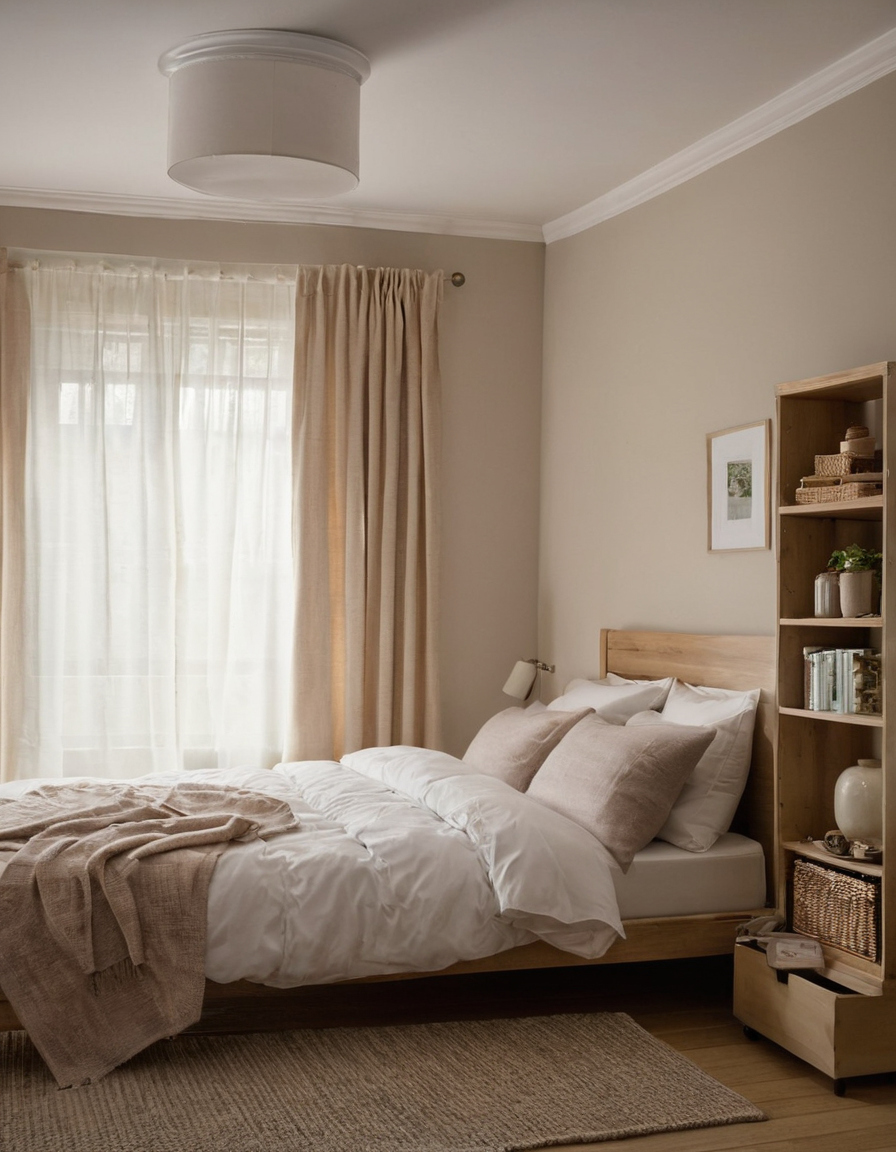
Curtains, bedding, radiator covers, and shelves require separate heat checks shown as an editorial planning reference.
How can a renter verify the finished radiator layout without risking the lease?
Photograph the measured gaps and confirm that the valve, vent, window, and maintenance route remain clear. Observe a normal heating cycle only under building instructions, without bleeding, dismantling, or testing unfamiliar equipment.
A cold-layout check should happen before the normal heating-cycle observation
- Check bed stability and bedding overhang.
- Test curtain movement, window operation, and door swing.
- Confirm valve reach and vent visibility.
- Keep outlets and the maintenance approach open.
During operation, follow hot-surface warnings and observe without touching the radiator. Report leaks, hammering, failed valves, damaged vents, scorching, odors, or unusual heat through the building’s maintenance process.
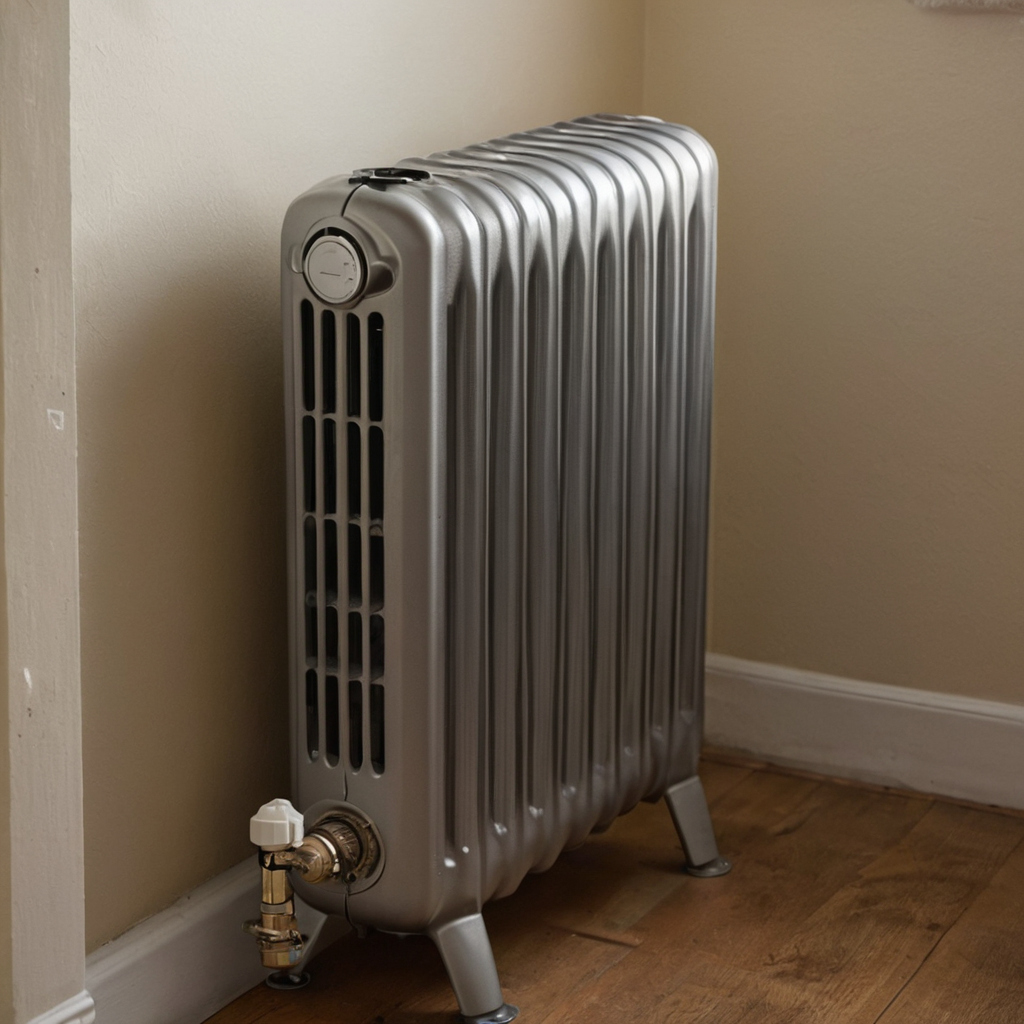
How can a renter verify the finished radiator layout without risking the lease shown as an editorial planning reference.
Move-in and move-out photographs protect the renter and the radiator
Take dated photographs of the radiator finish, pipes, valve, walls, trim, and floor. Retain written approval for every guard, cover, shelf, or accessory. At move-out, remove renter-owned pieces and check for residue, floor damage, textile marks, and blocked controls. Leave the documented operating zone clear.
Frequently asked questions
Is it okay to put a bed beside a steam radiator?
Yes, if the complete bed and loose bedding remain outside the equipment-specific zone and the valve, vent, window, egress, and service route stay accessible.
How much space does a bed need around a bedroom radiator?
Use the radiator or enclosure instructions and written building guidance. No single clearance applies to every steam, hot-water, or electric system.
What furniture should not be placed in front of a radiator?
Reject furniture that blocks heat, traps textiles, conceals controls, narrows egress, or must be moved before maintenance can reach the equipment.